Are high energy bills leaving you hot under the collar? Your HVAC system could be the culprit. Heating and cooling account for nearly half of a typical home’s energy usage, making it a prime area for cost-saving improvements. At Bill’s Heating & A/C, we’re committed to helping you make smart choices that enhance your comfort while reducing expenses. This comprehensive guide explores various energy-efficient upgrades that can significantly lower your HVAC costs.
Table Of Contents
- Thermostat Issues
- Clogged Air Filter
- Pilot Light or Ignition Problems
- Gas Supply Issues
- Faulty Blower Motor
- Ductwork Issues
- Tripped Safety Switches
- Age of the Furnace
- When to Call a Professional
- Conclusion
1. Thermostat Issues
The thermostat is the brain of your heating system. If it’s not working correctly, your furnace won’t know when or how to heat your home.

Incorrect Settings
Ensure your thermostat is set to “Heat” mode and the temperature is set higher than the current room temperature. It might sound simple, but accidental adjustments can happen.
Calibration Problems
If your thermostat isn’t accurately reading the temperature, it may not signal the furnace to produce heat. Consider recalibrating it or replacing the batteries if it’s a digital model.
Loose Wiring or Connection Issues
Wiring problems can prevent the thermostat from communicating with the furnace. If you suspect this, it’s best to consult a professional technician.
2. Clogged Air Filter
A dirty or clogged air filter restricts airflow, which can cause the furnace to overheat and shut down the heating cycle.

Impact of a Dirty Filter
When the filter is clogged, the furnace struggles to pull in enough air. This can trigger safety mechanisms that prevent the furnace from heating to avoid overheating.
Solution
Check your air filter and replace it if it’s dirty. Regularly changing your filter every 1-3 months can prevent this issue and improve indoor air quality.
3. Pilot Light or Ignition Problems
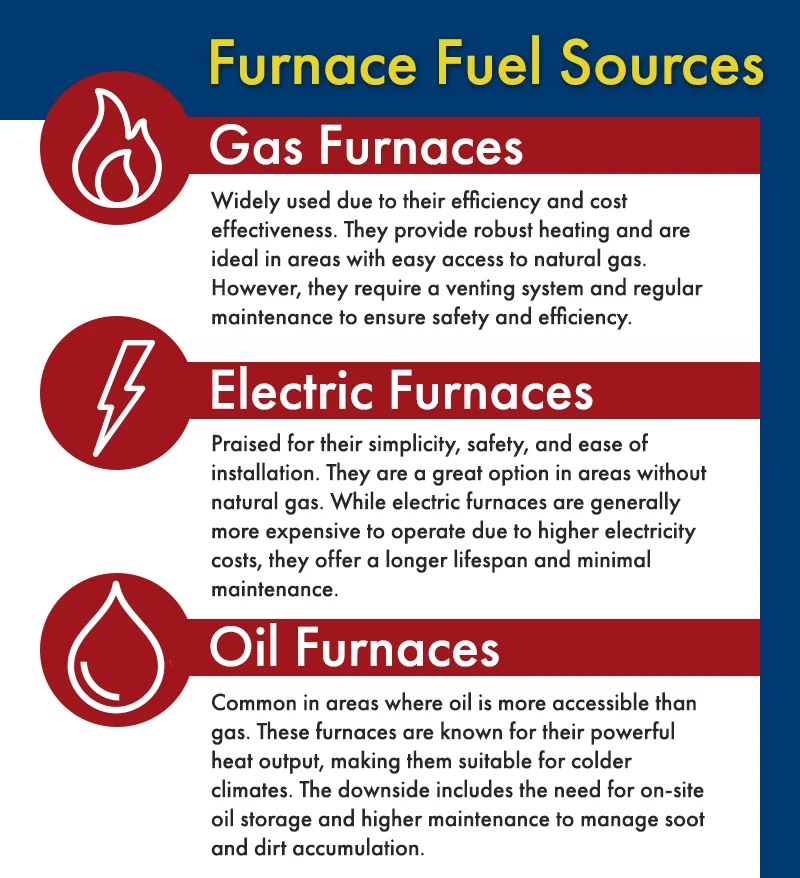
For gas furnaces, the pilot light or electronic ignition is essential for starting the heating process.

Pilot Light Is Out
If the pilot light has gone out, the furnace can’t ignite the burners to produce heat.
Faulty Ignition System
Modern furnaces use electronic ignition systems, which can fail due to component wear or electrical issues.
What to Do
For a pilot light outage, you can try relighting it following the manufacturer’s instructions. If you’re uncomfortable doing this or have an electronic ignition, contact a professional technician.
4. Gas Supply Issues
Your furnace requires a steady gas supply to function. Any disruption can prevent it from producing heat.
Closed Gas Valve
Sometimes, the gas valve leading to the furnace may be accidentally turned off.
Gas Line Problems
Issues with the gas line, such as leaks or pressure problems, can disrupt the gas flow.
Action Steps
Check that the gas valve is open. If you suspect a gas leak or other gas line issues, evacuate your home immediately and call your gas company and a professional HVAC technician.
5. Faulty Blower Motor
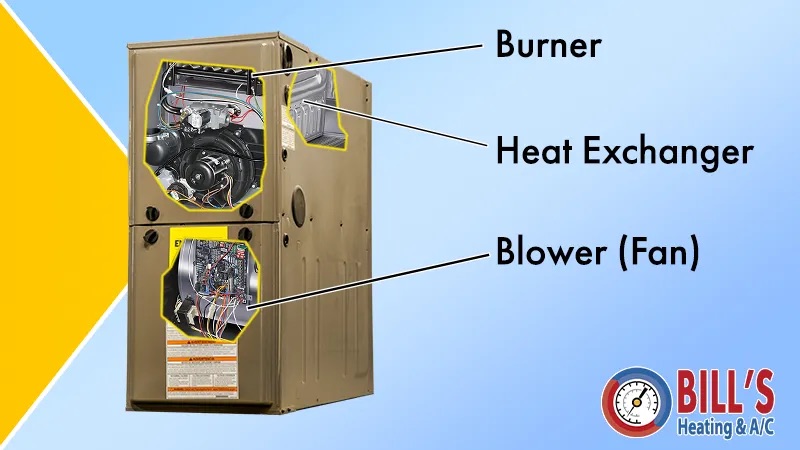
The blower motor is responsible for circulating air throughout your home. If it’s running without producing heat, there may be an issue.

Signs of a Blower Motor Issue
- Unusual Noises ‐ Grinding or squealing sounds indicate mechanical problems.
- Weak Airflow ‐ Reduced airflow can mean the motor is failing.
- Continuous Running ‐ If the blower runs nonstop without heat, it’s a red flag.
Solution
A faulty blower motor often requires professional repair or replacement. Contact Bill’s Heating & A/C for expert assistance.
6. Ductwork Issues
Problems with your home’s ductwork can prevent warm air from reaching your living spaces.

Leaks and Disconnections
Leaks, holes, or disconnected ducts allow warm air to escape before reaching the vents.
Blocked Vents
Obstructions in the ducts or vents, such as debris or closed dampers, can impede airflow.
Resolution
Inspect visible ductwork for issues. Professional duct inspection and sealing can improve airflow and heating efficiency.
7. Tripped Safety Switches
Furnaces come equipped with safety switches to prevent dangerous operating conditions.

Limit Switch
The limit switch shuts off the furnace burners if it detects overheating, but the blower may continue to run to cool the system.
Rollout Switch
This switch detects flames or heat outside the combustion chamber and will shut down the furnace for safety.
Next Steps
If a safety switch has tripped, it’s essential to identify and fix the underlying issue. This typically requires a professional technician’s expertise.
8. Age of the Furnace
An older furnace may struggle to heat effectively due to worn-out components or outdated technology.

Signs of an Aging Furnace
Frequent Repairs ‐ Constant breakdowns indicate the furnace is nearing the end of its lifespan.
Inefficiency ‐ Higher energy bills without increased usage can signal inefficiency.
Uneven Heating ‐ Inconsistent temperatures throughout your home.
Consider Replacement
If your furnace is over 15-20 years old, it might be time to consider upgrading to a new, energy-efficient model. This can improve comfort and reduce energy costs.
9. When to Call a Professional
While some minor issues can be addressed by homeowners, many furnace problems require professional attention.

Indicators You Need Expert Help
- Persistent Issues ‐ Problems that continue after basic troubleshooting.
- Strange Noises or Smells ‐ Unusual sounds or odors can indicate serious issues.
- System Won’t Turn On ‐ If the furnace doesn’t start at all.
- Gas Odors ‐ Evacuate immediately and call professionals if you smell gas.
How Bill’s Heating & A/C Can Help
Our experienced technicians can diagnose and repair all types of furnace problems. We offer prompt, reliable service to restore your home’s comfort quickly.
10. Conclusion
Reducing your HVAC costs doesn’t have to mean sacrificing comfort. By implementing these energy-efficient upgrades, you can enjoy a more comfortable home and lower energy bills.
Whether it’s upgrading your equipment, improving insulation, or integrating smart technology, each step contributes to a more efficient and cost-effective HVAC system.
At Bill’s Heating & A/C, we’re here to help you make the best choices for your home. Contact us today to discuss how we can assist you in achieving greater energy efficiency and savings.